
The Bahi Reading Workshop is a two-week online intensive workshop designed to train participants in reading and interpreting bahi—traditional ledger manuscripts used in the administrative, commercial, and courtly systems of western Rajasthan. These records constitute an invaluable yet underutilized archival source for historians working on early modern and colonial South Asia.
Focusing particularly on materials from the state of Jodhpur-Marwar, this workshop introduces participants to a wide range of bahi manuscripts dating from the eighteenth to the twentieth centuries. Through a combination of structured lectures, transcription and translation exercises, and supervised manuscript readings, participants will develop the practical skills necessary to decipher the script, numerical systems, and specialized vocabulary used in Marwari bookkeeping traditions.
The workshop emphasizes direct engagement with archival material. Participants will learn how bahis were produced, the social groups who wrote and maintained them, and the diverse information they contain—ranging from administrative records and courtly transactions to glimpses of everyday life within royal households. By the end of the course, participants will be able to independently read and transcribe selected passages from bahi manuscripts and apply these skills to their own research.
Course Structure
Week One — Self-paced Foundational Training
Week One consists of recorded lectures organized into five modules. Participants will watch lectures independently and meet the instructor periodically for doubt-clearing sessions. Mandatory practice assignments will be given after the completion of certain lessons that need to be submitted for evaluation.
Module 1: Historical Context and the Tradition of Bahi Writing
This module introduces the history and practice of bahi writing traditions in western Rajasthan, exploring their role within courtly and administrative systems. Participants will gain a broader understanding of record-keeping cultures—who the scribes were and their role in Rajput courts, the material features of bahis, and how these records were circulated and preserved within archival contexts.
Module 2: Script, Alphabets, and Orthographic Conventions
This module provides core training in reading bahis, introducing participants to the shorthand script’s alphabet, orthographic features, vowels, conjuncts, and common scribal conventions. It also covers calendrical references and regional variations in Jodhpur records, with hands-on exercises using ledger folios to build reading proficiency.
Module 3: Numbers, Calculations, and Measurement Systems
This module explores traditional systems of bookkeeping in bahis, focusing on numerical notation, calculation methods, and units of weight, measurement, and currency. Participants will learn how time, payments, and transactions were recorded, and will practice identifying numerical patterns and performing basic calculations from manuscript examples.
Module 4: Genres and Categorization of Bahis
This module surveys the diverse genres of bahis in the archival collections of Jodhpur. It introduces participants to the range of records contained in these ledgers—administrative documents, court proceedings, household accounts, legal records, and revenue registers.
The module also introduces the major archival repositories including the Rajasthan State Archives (Bikaner), Maharaja Man Singh Pustak Prakash, and the Chopasani Shodh Sansthan.
Module 5: Interpreting Bahi Folios
The final module of Week One introduces participants to sample bahi folios across genres such as Haqiqat Khata Bahi, Ohda Bahi, Thikana Bahi, Sanad Parwana Bahi, and Arji Bahi etc. Guided examples will be useful in exploring records of ceremonies, appointments, legal disputes, correspondence, and everyday courtly life. It highlights the range of social actors represented in these texts and focuses on interpreting vernacular terms in context, while situating the folios within their broader historical and political settings.
Week Two — Supervised Reading and Final Assessment
In the second week, participants will work in small reading groups, meeting the instructor for three supervised sessions focused on collective reading, transcription, and discussion of selected bahi excerpts. As familiarity with the script grows, the complexity and number of folios will gradually increase. These live reading groups will be participant led.
Each group will engage with manuscripts organized around thematic clusters, including the events of 1857 from the perspective of Jodhpur, everyday courtly life and social organization, and material histories of Jodhpur-Marwar. Through these themes, participants will encounter a wide range of records—from political correspondence and administrative decisions to court rituals and economic transactions. Diverse themes will also allow participants to engage with a wider range of bahi genres.
Short transcription and translation assignments throughout the week will reinforce learning and prepare participants for the final exam which will be a timed assessment of bahi transcription and translation. Achieving a minimum of 70% in the final submission is a key requirement for successfully completing the course and receiving the certificate.
Faculty

Sawai Singh Panwar
Rajasthani Bhasha Academy
Sawai is a Jodhpur-based researcher with a bachelor’s and master’s in History from the University of Delhi. He is currently working with the Rajasthani Bhasha Academy on projects focused on the selection and transcription of Rajasthani manuscripts across genres. He was previously associated with the Maharaja Man Singh Pustak Prakash archive, where he trained in reading and transcribing historical documents, including Jodhpur bahis (ledgers) in the Marwari language.
Dr. Saddique Mohammed
Rajasthani Shodh Sansthan
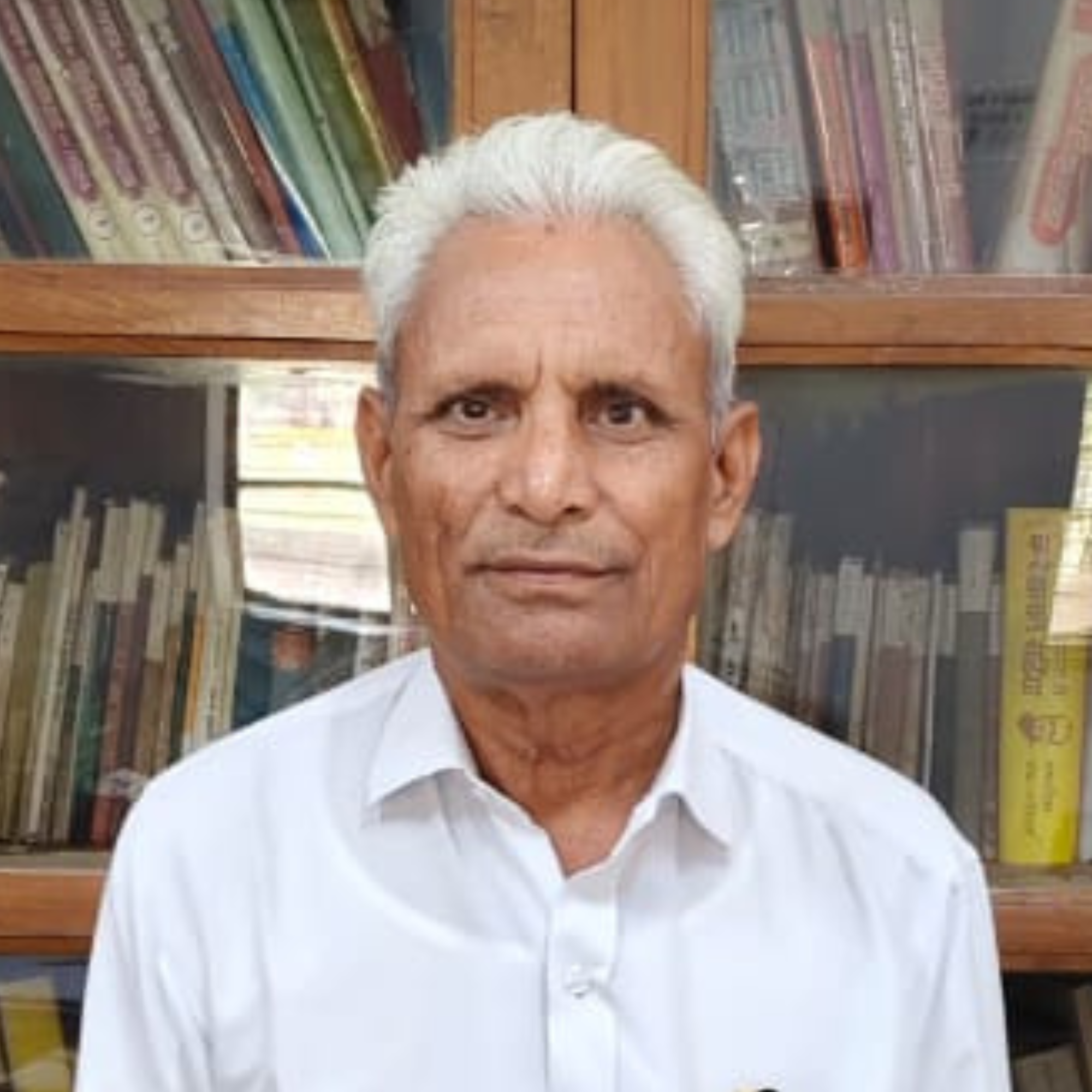
Dr. Saddique Mohammed is a specialist in Rajasthani language and manuscript traditions, with nearly four decades of sustained scholarship. He completed his PhD in Hindi from Jai Narain Vyas University in 1984, and after half a decade in academia, joined the Rajasthani Shodh Sansthan Chopasni as Editor of the Rajasthani Shabadkosh (1991–2013). Since 2018, following his retirement, he has continued at the Rajasthani Shodh Sansthan as Research Officer. He is the author of nine monographs and has translated numerous Rajasthani texts into Hindi.
Who Can Apply?
The medium of instruction will be both Hindi and English. This course only focuses only on the specialised script, participants are expected to have a working knowledge of spoken and written Hindi and/or Rajasthani (especially Marwari) as well as Devnagri typing.
The workshop is particularly suited for doctoral students, early-career researchers, and scholars interested in the history of Rajasthan, archival studies, and manuscript cultures.
The medium of instruction will be both Hindi and English. Participants are expected to have a working knowledge of spoken Hindi and/or Rajasthani (especially Marwari) as well as Devnagri typing.
Certification
Participants who score 70% or above on the final transcription and translation assessment receive a certificate of completion.